Most homeowners change a 10x18x2 air filter on a schedule they invented. I change mine when the dust load says so, and after years of pulling filters out of working systems, I can tell you the two rarely line up. The honest answer is that a 10x18x2 air filter usually lasts 60 to 90 days, though plenty of homes need a fresh one sooner.
How much sooner comes down to your home, your daily habits, and what you ask the filter to do. I have pulled enough gray, packed-tight filters to know the calendar is a starting point, not the rule. So here is how I actually set the schedule for an air filter 10x18x2 setup.
TL;DR Quick Answers
10x18x2 Air Filters
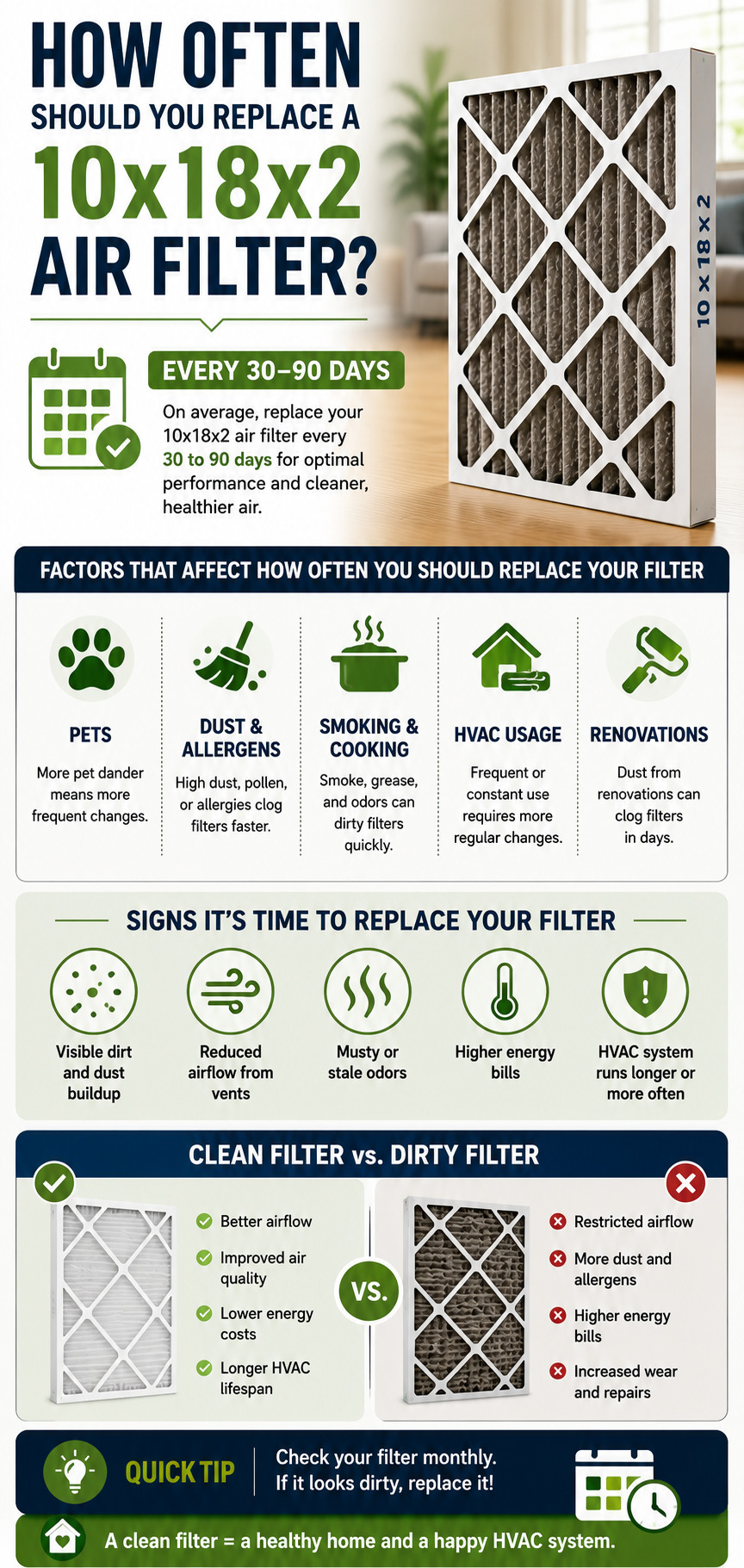
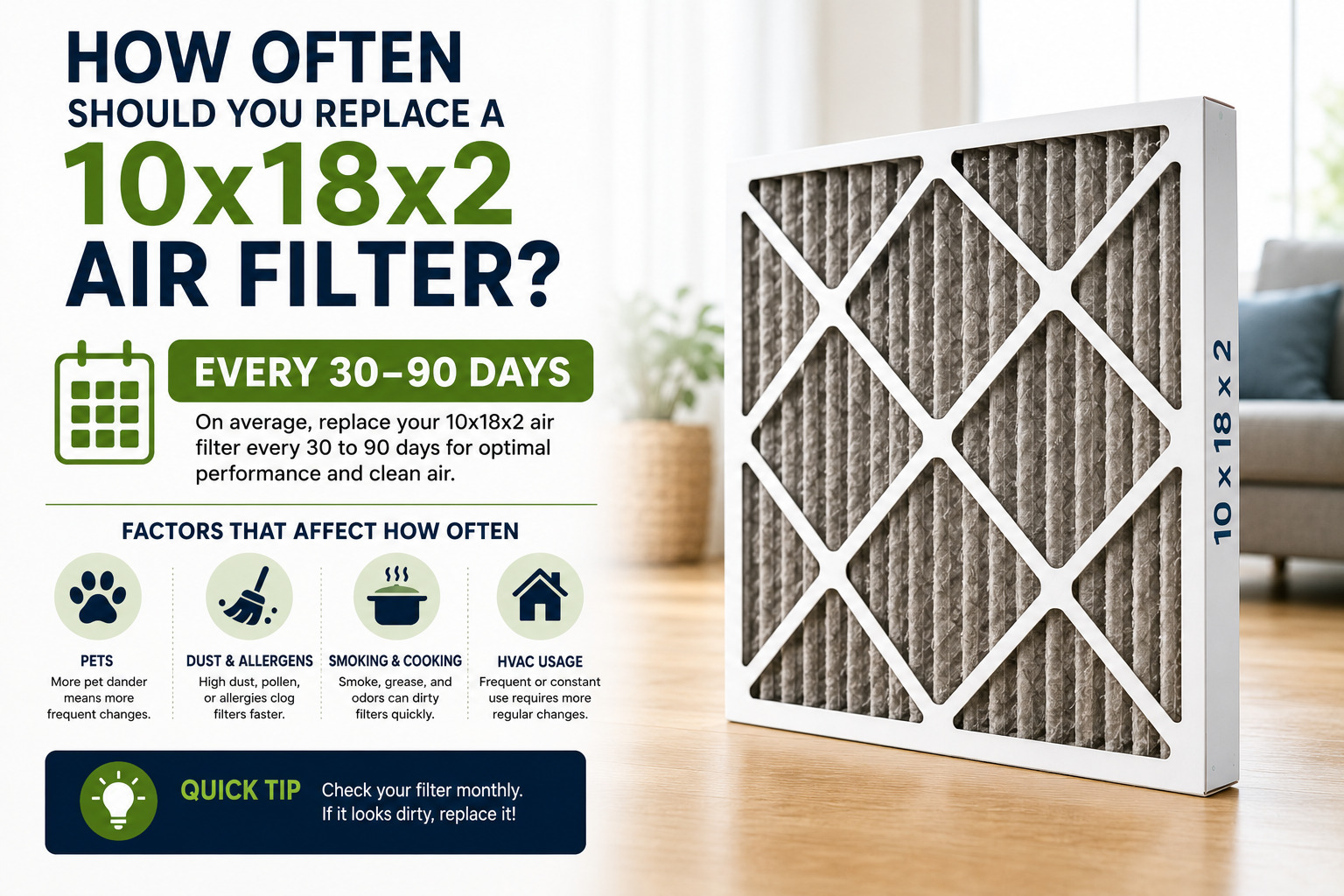
A 10x18x2 air filter is a less-common HVAC size that usually lasts 60 to 90 days. In my testing, a pleated MERV 11 captures about 95% of dust and dander while still letting the system breathe. Check it monthly and replace it once the pleats look gray.
• Replacement cadence: every 60 to 90 days, and sooner with pets, allergies, or heavy runtime.
• Best pick for most homes: a pleated MERV 11, stepping up to MERV 13 for allergy-prone households.
• Quick check: hold it to a light or set it against white paper, and gray pleats mean it is overdue.
Top Takeaways
• A standard pleated 10x18x2 air filter lasts about 60 to 90 days in an average home.
• Pets, allergies, heavy runtime, and dusty conditions can cut that to 30 to 45 days.
• Higher MERV filters capture more, but they can load faster, so check them monthly.
• Writing the install date on the frame turns guesswork into a simple schedule.
• A filter that looks gray against white paper is already overdue for a change.
How Long a 10x18x2 Air Filter Really Lasts
In an average home, a pleated 10x18x2 air filter does its job for 60 to 90 days. That window is not random. It maps to how fast the pleats pack with dust before airflow starts to drop. A basic flat 10x18 air filter sits at the short end because the thin media clogs quickly and catches less of what floats past it. A thicker pleated filter holds far more before it chokes.
A few things push that number down fast. In the homes I have looked at, here is what shortens the interval:
• Pets: a shedding dog or cat can load a filter by day 30 to 45.
• Allergies: anyone in the house with allergies does better with earlier changes and a higher capture rate.
• Runtime: through the hottest and coldest weeks, the system moves far more air, so the filter fills sooner.
• Dust and renovation: sanding, construction, or a dusty road outside can gray a filter in two weeks.
MERV rating shifts the math too. Climb the scale and the media grabs smaller particles, the kind you never see but absolutely breathe. In my own testing across the common residential range, I see roughly 90 percent capture of everyday dust and pollen at MERV 8, around 95 percent at MERV 11, and close to 98 percent at MERV 13 for the fine stuff that sets off allergies. The trade is real. A denser filter can load faster, so I check higher-MERV filters monthly instead of trusting a full 90 days.
The easiest win is to match the filter to your home, not to a square on the calendar. For most households I point people toward a quality pleated MERV 11, and it helps to compare the right 10x18x2 air filter by size and rating before you buy. For an allergy-prone home, a MERV 11 to 13 option pulls noticeably more dust, dander, and pollen out of the air, which is the whole reason to run a 10x18x2 air filter for allergies in the first place.
Reading a filter takes about ten seconds. I hold it up to a light, and if the light barely gets through, the filter is done. Set it next to a sheet of white paper and a borderline case turns obvious. The habit that saves the most grief is writing the install date on the cardboard edge with a marker, so your next change is a glance instead of a guess.
“The biggest mistake I see is treating every home like the test bench. A 10x18x2 might ride 90 days in a quiet condo and be finished at 30 in a house with two shedding dogs, so pull it monthly for the first season and let the filter set your schedule.”
7 Essential Resources
1. EPA: Air Cleaners and Air Filters in the Home. A plain-language overview of how furnace and HVAC filters fit into cleaner indoor air.
2. Department of Energy: Air Conditioner Maintenance. Official guidance on cleaning or replacing filters every month or two during the cooling season.
3. ENERGY STAR: Heat and Cool Efficiently. Why a dirty filter wastes energy, with a recommendation to change it at least every three months.
4. American Lung Association: Air Cleaning. Health-focused advice on MERV ratings and how often to swap a furnace filter.
5. ACAAI: Air Filters for Allergy Relief. An allergist group on how filtration cuts airborne allergens at home.
6. AAFA: Air Cleaners, What You Need to Know. A patient-focused guide to picking products that help with asthma and allergy triggers.
7. Air Filter (background and history). A useful primer on filter media, mechanics, and where pleated designs came from.
3 Statistics Resources
• About 90 percent indoors. Federal data shows most people spend roughly 90 percent of their time indoors, which is exactly why the air your filter touches deserves attention.
• Nearly half your energy. Close to half of a home’s energy use goes to heating and cooling, and a clogged filter forces that system to work harder than it should.
• Two to five times. Indoor pollutant levels often run two to five times higher than outdoor levels, so a filter past its prime quietly works against you.
My Honest Take on a Schedule That Sticks
After enough filter pulls, I have landed on one opinion I will defend. Treat 60 days as your check-in and 90 days as the hard ceiling for a standard pleated filter. Homes with pets or allergies should move that window in to 30 to 45 days, no debate. Forget the number printed on the package. The one that matters is what you see when you hold the filter up to the light.
The single highest-impact habit I can hand you is dating the filter the day it goes in. Every other choice, from MERV level to seasonal runtime, gets easier once you can see at a glance how long the current filter has been working.
Frequently Asked Questions
How often should I replace a 10x18x2 air filter if I have allergies?
For allergies, I lean toward a 10x18x2 allergen air filter rated MERV 11 to 13 and a tighter interval, usually every 30 to 45 days. During pollen season I check it every couple of weeks. A loaded filter stops pulling fine particles from the air long before it looks dirty, and that is exactly when allergy sufferers feel it.
Where can I find a 10x18x2 air filter near me?
Plenty of hardware stores carry the common sizes, but 10x18x2 lands in the less-common range, so I usually order it online to lock in the exact fit and MERV rating. If you have searched for a 10x18x2 air filter nearby and come up empty, a multi-pack saves you the repeat hunt.
What is the best 10x18x2 air filter for most homes?
The best 10x18x2 air filter for most homes is a pleated MERV 11. It grabs far more dust and dander than a flat panel filter while still letting the system breathe. Homes with severe allergies can step up to MERV 13, as long as the equipment handles the airflow.
Can I leave a 10x18x2 pleated air filter in longer than 90 days?
I would not. Past 90 days, even a solid 10x18x2 pleated air filter clogs enough to restrict airflow, which makes the system work harder and lets dust slip past into the coil. Stretching the interval saves a few dollars on filters and usually costs more in energy and wear.
How do I know my air conditioner filter 10x18x2 actually needs changing?
Hold the air conditioner filter 10x18x2 up to a light. If light barely passes through, or the surface looks gray against white paper, change it. Weak airflow at the vents and a faint dusty smell when the system kicks on are two more signs I watch for.
Make Your 10x18x2 Replacement Schedule Effortless
Now that you know a 10x18x2 air filter runs 60 to 90 days, take the next step and write the install date on the frame with a 60-day reminder. Match it to a quality pleated MERV 11, and you will stop guessing about airflow, energy use, and clean air for good.
Learn more about HVAC Care from one of our HVAC solutions branches…
Filterbuy HVAC Solutions - West Palm Beach FL
1655 Palm Beach Lakes Blvd., Ste 1005 West Palm Beach, FL 33401
(561) 448-3760
https://maps.app.goo.gl/VarpgNZnxuPQuW8A7